

What Is the Best Age for a Deep Plane Facelift?
A deep plane facelift has rapidly become one of the most talked-about facial rejuvenation procedures. Its ability to reposition the deeper support layers of the face—rather than simply tightening the skin—makes it one of the most powerful techniques for restoring youthful contours. But one of the most common questions patients ask is: “What is the best age for a deep plane facelift?”
It’s a simple question but age alone is rarely the deciding factor. Instead, it’s the degree and pattern of ageing, anatomy, skin quality, and a patient’s aesthetic goals that determine the right time.
Jag Chana is one of the leading experts in Facelift surgery in the UK and explores what “ideal age” really means when it comes to deep plane facelift surgery, and why the best time to have the procedure may vary widely between individuals.
Understanding the Deep Plane Facelift
What makes a deep plane facelift different from other facelift techniques ?
Traditional facelifts often focus on tightening skin and working on the superficial musculoaponeurotic system (SMAS). While these can improve jowling, skin laxity, and the jawline, results may sometimes look less natural or may not last as long, especially if too much reliance is placed on pulling the skin.
A deep plane facelift goes beneath the SMAS layer, releasing and repositioning deeper ligaments and facial units. This technique allows the surgeon to lift the cheek, midface, nasolabial folds, and jawline as a unified structure
.
Key benefits of the deep plane approach include:
• More natural, unpulled results
• Superior correction of midface descent
• Restoration of youthful cheek volume
• Softer nasolabial folds without fillers
• Long-lasting improvements to the jawline
• Improved definition of the neck when combined with a neck lift
Because it addresses the architecture of the face rather than the skin alone, the deep plane facelift is often ideal for patients who want a long-lasting and comprehensive rejuvenation.
Why Age Alone Doesn’t Determine Candidacy
A common misconception is that facelift outcomes are primarily age-dependent. In reality, facial ageing varies dramatically between individuals based on:
• Genetics
• Bone structure
• Sun exposure
• Weight fluctuations
• Skin quality
• Smoking history
• Hormonal changes
• Ethnicity
• Lifestyle and stress levels
Two people in their early 50s may appear to age very differently. One might show severe jowling and midface descent, while the other maintains excellent facial support. Look at the photos below below of two patients in their 50s who have undergone facelift surgery. Both similar ages and very different ageing patterns.
This is why “the best age” for a deep plane facelift is better understood as a range rather than a single number.
The Typical Age Range for a Deep Plane Facelift
Although every patient is unique, most candidates fall into one of the following groups.
1. Early 40s–Mid 40s: The Preventative or Early-Signs Group
Some individuals begin to see meaningful structural changes in their early to mid-40s. These may include:
• Mild jowling
• Flattening of the cheeks
• Early descent of the midface
• More noticeable nasolabial folds
• Subtle neck laxity
Is a deep plane facelift right at this age?
Possibly—but not always.
Patients in their 40s who seek a deep plane facelift usually fall into three categories:
? Patients with genetically early ageing
Some people have a family pattern of early midface descent or weaker ligament support. They may look tired or drawn sooner than peers despite good skincare.
? Patients aiming for “prejuvenation”
A growing trend, particularly among professionals in highly visible roles, is to intervene earlier to maintain youthful features rather than restore them later.
? Patients who have undergone weightloss
This is a growing indication for facelift surgery especially in the current era of weightloss medications. Individuals who lose weight in a sustained manner can suffer from
Benefits of having the procedure in your 40s:
• Shorter and easier recovery
• Less dramatic anatomical changes needed
• Very natural results—friends may not realise surgery occurred
• Helps maintain a youthful appearance rather than “reverse” ageing
• May delay the need for further surgery for many years
Drawbacks:
• Not everyone has enough structural ageing to justify it
• Some patients may achieve good results with non-surgical options
Bottom line for 40s:
A deep plane facelift can be appropriate when meaningful anatomical ageing changes have begun.
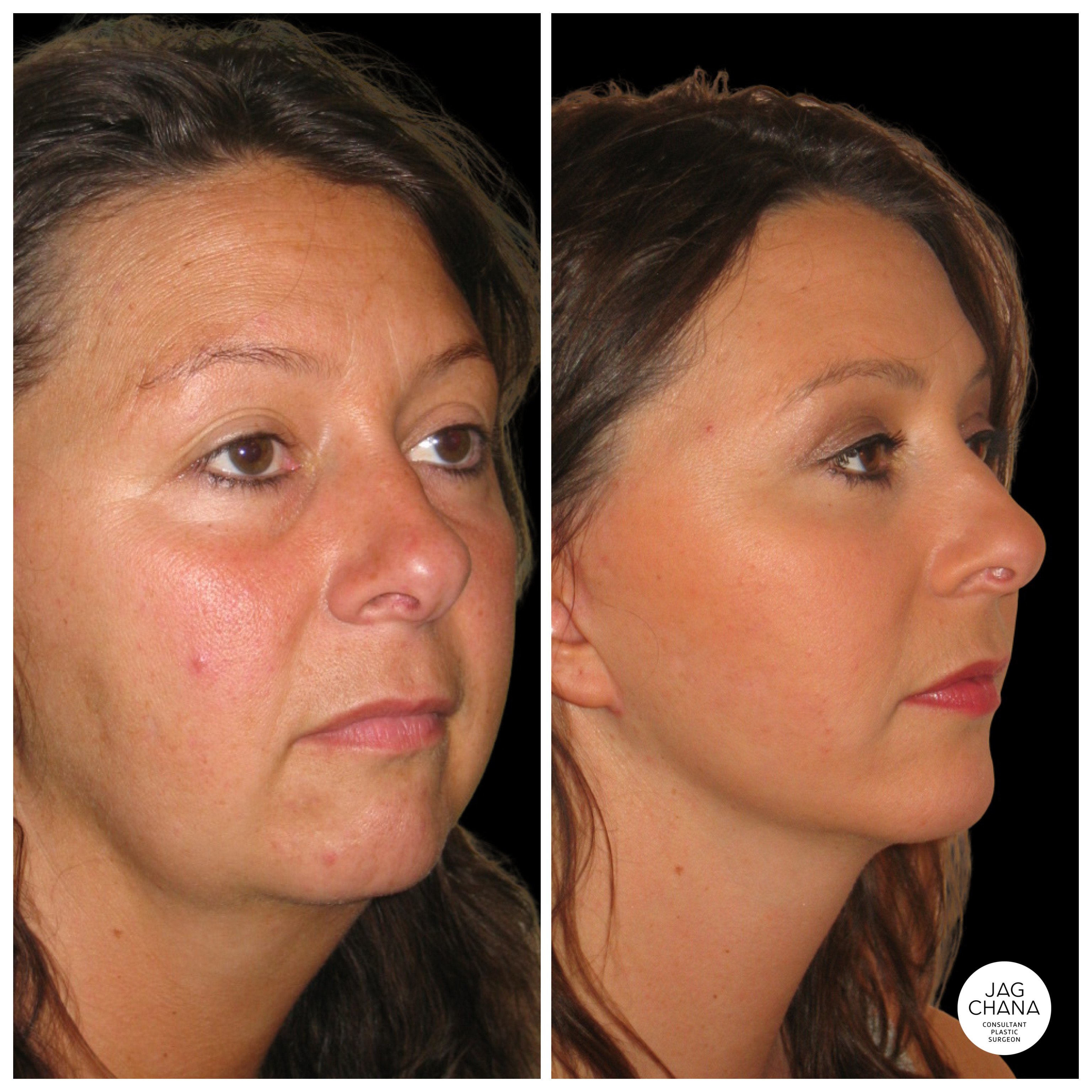
The photographs before are of one of my patients who is 39 years of age. A deep plane facelift, necklift and blepharoplasty has been carried out with very beautiful and natural results. In fact she looked beyond her years but in fact the surgery has restored her age related beauty.
2. Mid 40s–Mid 50s: The Prime Age for Deep Plane Facelift Surgery
For most individuals, the mid-40s to mid-50s is the most common and probably the most advantageous time to undergo a deep plane facelift in most individuals.
Why this age range is ideal:
During these years, patients typically experience:
• Noticeable jowls
• Midface volume descent creating a tired look
• Deeper nasolabial folds
• Loss of jawline definition
• Neck laxity or early banding
• Thinning of the skin
These changes are significant enough to benefit from surgery, yet the skin and underlying tissues usually retain good elasticity, which supports elegant, natural healing.
Key advantages of surgery in the 50s:
• Strong skin elasticity enhances results
• Good longevity of the lift
• Balanced expectations—patients are correcting visible ageing, not chasing perfection
• High satisfaction rates
• Often requires the least “secondary work” to maintain results
For most people, this is the decade where aesthetic benefit and surgical efficacy align perfectly.
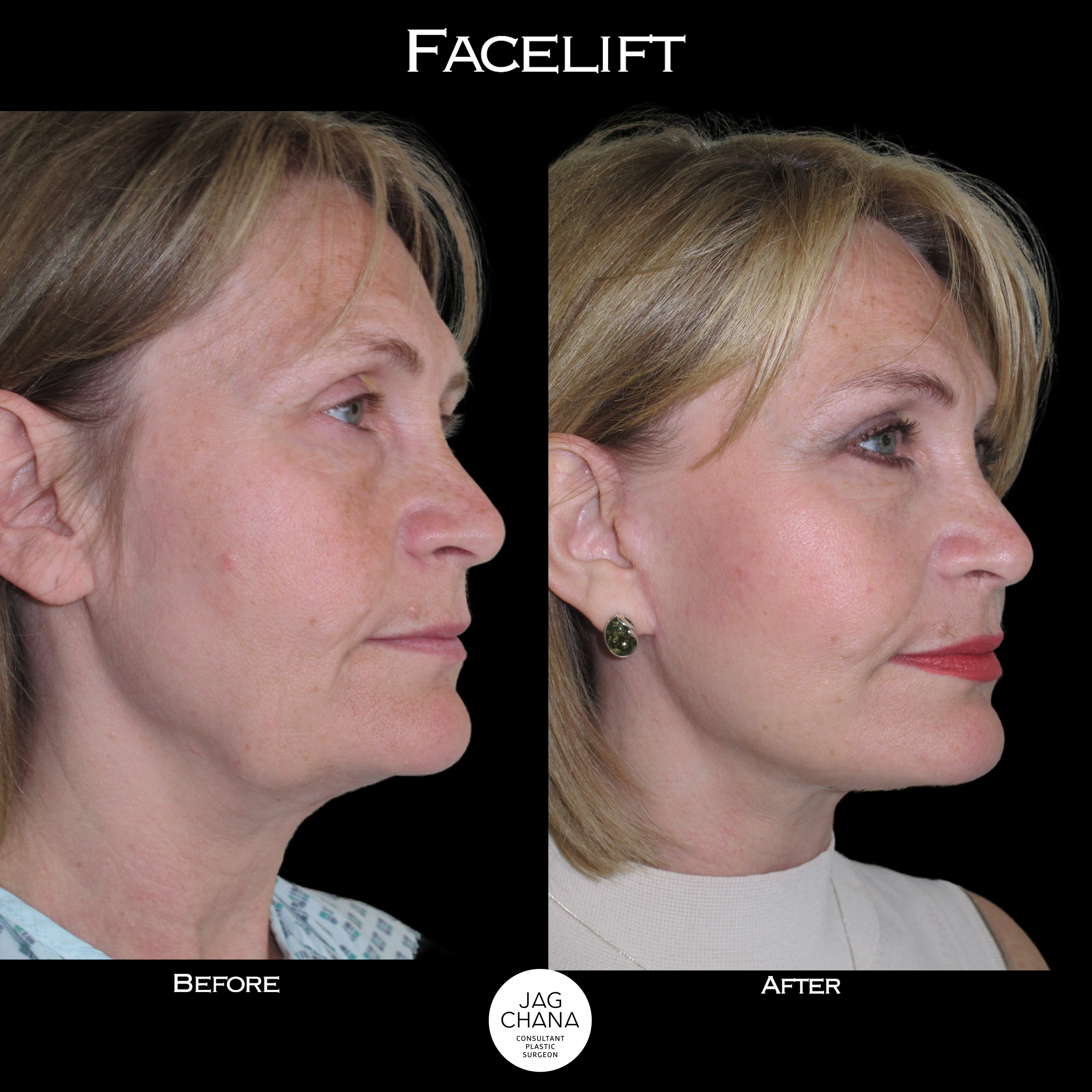
In this patient shown below in her late 40s the main issue is laxity in the jawline causing jowls and laxity in the neck . In a patient such as this a deep plane facelift is performed which has adequately corrected her jowls and enhanced a jawline. Her underlying anatomy is one of a strong jawline and chin and therefore this is a predictor of a good results after surgery. She also had some neck laxity which even in her 40s has required neck surgery to optimize her result and sharpen the jawline and neck contours.
3. Mid–Late 50s to Early 60s: The Transformational Age Group
Many patients seek surgery in their mid-50s to early 60s because the signs of ageing become more pronounced. This group often experiences:
• Pronounced jowling
• Heavier nasolabial folds
• Midface descent creating hollow or sagging cheeks
• Neck banding and skin laxity
• Less youthful skin tone and texture
Is a deep plane facelift effective at this age?
Absolutely—this is still an excellent age range for the procedure.
Benefits:
• Dramatic rejuvenation while maintaining natural appearance
• Patients feel the improvement is meaningful and worthwhile
• Psychological boost as the face is restored to match inner vitality
Additional procedures often performed for this group:
• Neck lift
• Upper or lower blepharoplasty
• Fat grafting to restore youthful volume
• Skin resurfacing
These combined techniques deliver a harmonious, rejuvenated appearance rather than a disconnected “tight face–loose neck” look.
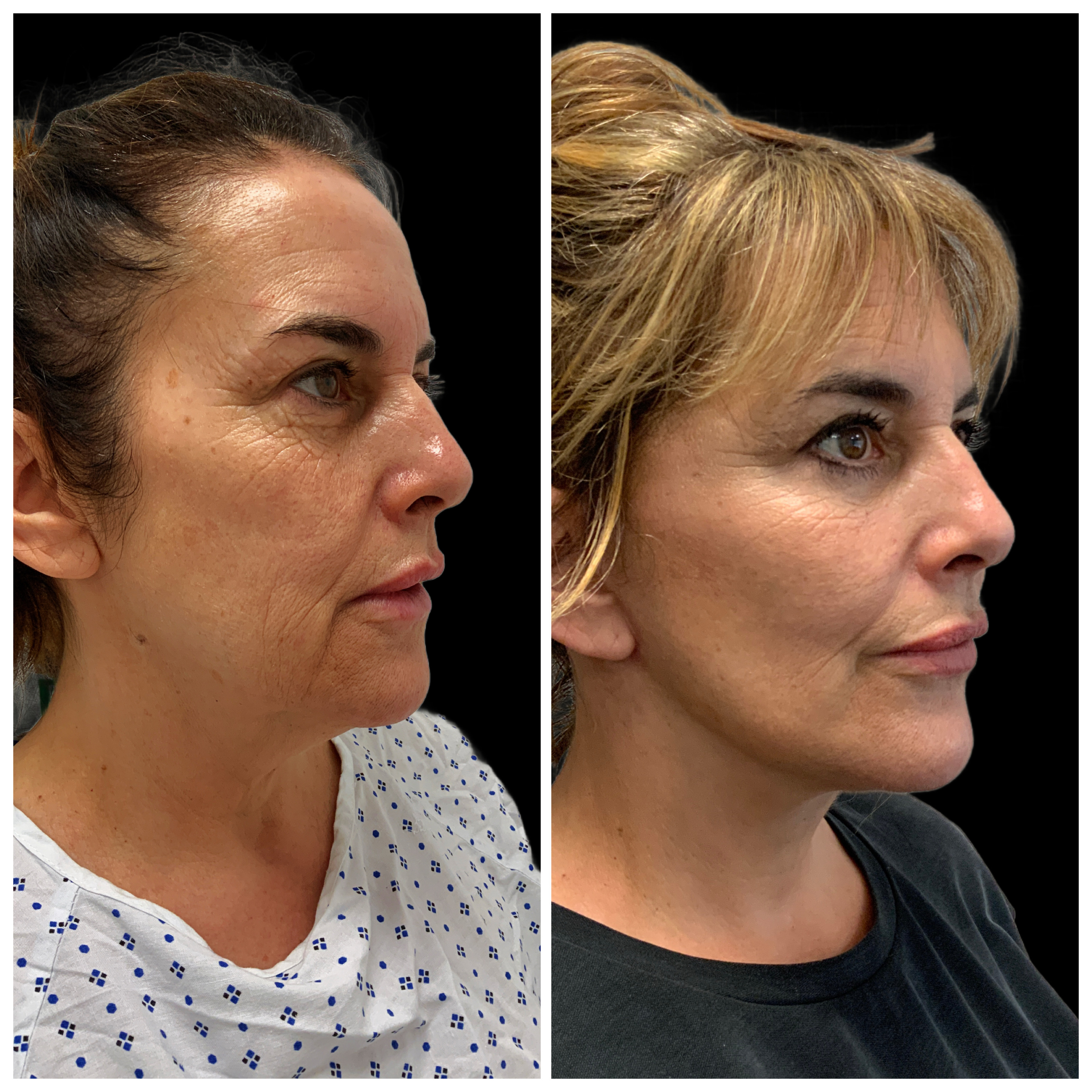
The example below is of my 57 year old patient on whom I carried out a deep plane facelift, necklift and lower blepharoplasty. She had laxity in the lower face extending onto the neck with lack of definition of her jawline . A combination of the deep plane facelift with a necklift has restored her youthful contours. The lower eyelid surgery was required as an adjunct and has helped to restore some balance. She also had a touch of fattransfer to her cheeks and this extra volume has provided a more youthful highlight to her face.
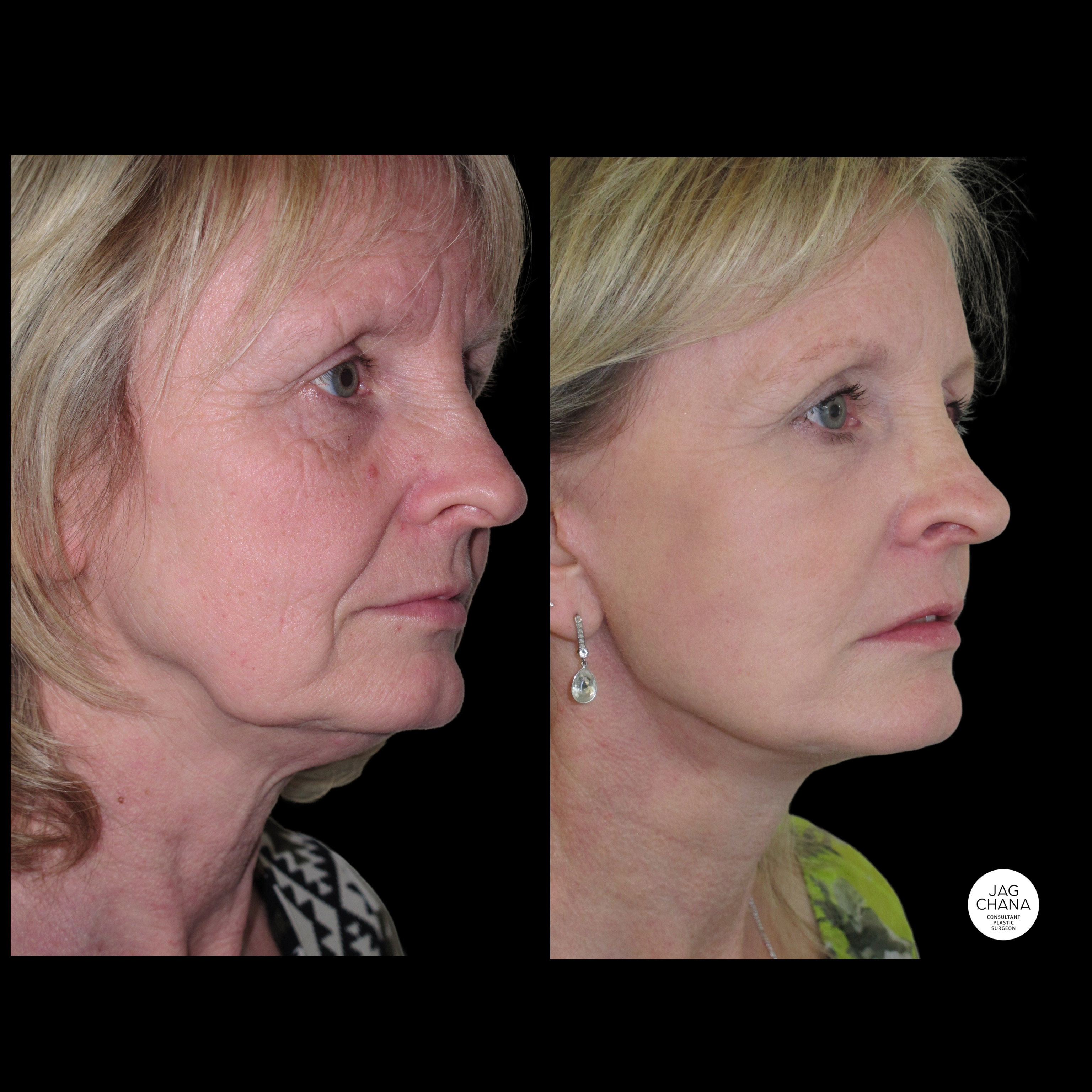
Example of patient in early 50 years of age only with jawline laxity but poor skin quality
This patient is an example where in the same age group of early 50s the skin quality is poor in contrast to the example above, and more in keeping with an older patient. Adjunctive treatment to rejuvenate the skin was needed and so a deep plane facelift was performed but cmbined with a full face fractional carbon dioxide laser treatment .This skin treatment has helped to allow the skin to appear more youthful by improving the complexion and reducing the degree of fine lines . She also underwent upper eyelid surgery. The lower eyelid rejuvenation was achieved with carbon dioxide laser treatment.
4. Mid-60s and Beyond: Tailored Rejuvenation for Advanced Ageing
Patients aged 65 or over increasingly undergo deep plane facelifts, driven by improvements in longevity and active lifestyles. Many individuals in their late 60s or 70s are healthier than previous generations and desire facial rejuvenation that reflects how they feel internally.
Is a deep plane facelift suitable at this age?
Yes—with appropriate assessment.
Factors that matter more than age include:
• General health
• Skin elasticity and quality
• Bone structure
• Medical history (e.g., heart or lung health impairment)
• Expectations and goals
Many people in their 60s–70s have exceptional skin quality, especially if they have protected their skin from the sun or have thicker, more resilient skin genetically. Others may have poor skin quality with sun induced skin damage and loss of collagen with thinning of the skin. Modern regenerative techniques can enhance the skin quality by using nanofat and stem cell treatments in combination with the facelift to provide a unified approach to the structural ageing issues as well as rejuvenating the skin itself. Furthermore, adjunctive procedures are usually required including necklift, browlift eyelid surgery, and fat transfer to restore volume.
Benefits for this age group:
• Most dramatic before-and-after transformation
• Restores definition lost over decades
• Greatly improves neck contour when paired with a neck lift
Considerations:
• Recovery may be slightly slower
• A comprehensive rejuvenation plan (eyes, neck, fat transfer, skin rejuvenation) is often needed
• Most patients may benefit from volume restoration such as fat transfer as well as regenerative techniques to rejuvenate the skin such as nanofat and stem cell injections
In the hands of an experienced facial surgeon, age itself is rarely a barrier.
Example of patient in early 60 years of age with a heavy neck
This patient below in her 60s has an extremely heavy neck with large amounts of excess skin in her neck. This is an extremely challenging case due to the degree laxity. In this case a lot of work has been required in the neck to address the skin excess and tighten the neck tissues including the muscles. This is combined with a deep plane facelift to sharpen the jawline and improve the marionette lines and folds of skin below the corner of the mouth. This patient has very different anatomy and presents a very different challenge to the one above in her 50s and the technique has to be adapted to meet the different anatomy.

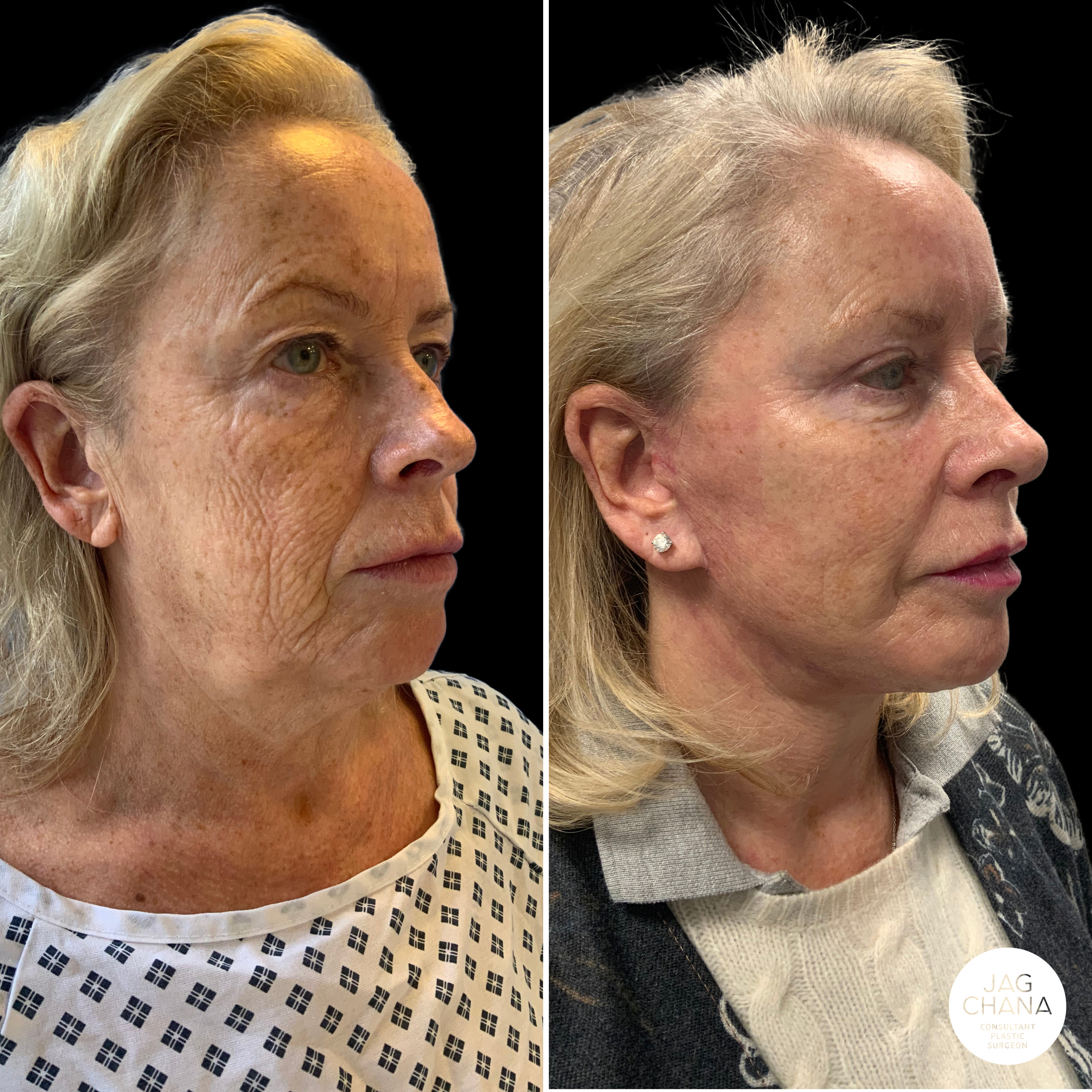
Patient in mid 60 years of age with poor skin quality
This patient had years of sun damage resulting in very deep skin lines on her cheek which would not have been helped by the facelift alone. In this case a deep plane facelift was combined with an advanced new fat transfer procedure called nanofat transfer where extremely fine fat is injected into the skin. Stem cells or the “cells of youth” are injected with the nanofat and these work to rejuvenate but also regenerate more youthful skin. You can learn more about stemcell facelift techniques by clicking this link here on stem cell facelifts
This patient also underwent a necklift alongside the deep plane facelift with upper and lower blepharoplasty as adjunctive procedures.
So What Is the “Best” Age?
The “best” age is the point at which:
1. The structural signs of ageing are significant enough that a facelift is the most effective treatment.
2. The skin and deeper tissues still have good elasticity to support a beautifully natural lift.
3. The patient desires long-lasting, meaningful improvement rather than temporary enhancement.
For most individuals, this moment falls between 45 and 60.
But remember: it is the degree of facial ageing, not the number, that determines timing.
________________________________________
Key Factors That Truly Determine Candidacy
To refine the ideal timing further, it is best to evaluate several anatomical and lifestyle factors.
________________________________________
1. Degree of Midface Descent
Deep plane facelifts are particularly effective at lifting the midface and cheeks as a composite unit with nasolabial line and marionette line improvement. Significant drooping in these areas is often the indication for deep plane facelift surgery.
________________________________________
2. Jowling Severity
When jowls obscure the jawline contour, surgical repositioning of the deep tissues becomes the most effective option.
________________________________________
3. Neck Laxity
Loose neck skin and platysmal bands often accompany jowling. Patients wanting full lower-face and neck rejuvenation benefit most. In the vast majority of situations a
________________________________________
4. Skin Elasticity
Elasticity does decline with age, but many patients retain excellent skin quality well into their 60s. Good elasticity enhances long-term results.
________________________________________
5. Lifestyle and Health
Non-smokers with stable weight and good cardiovascular health are better candidates regardless of age.
________________________________________
6. Goals and Expectations
Some patients want preventative enhancement with subtle lifting, while others are ready for comprehensive rejuvenation. Both are valid with appropriate planning.
________________________________________
Why Some Patients Choose to Operate Earlier—and Others Later
Common reasons patients opt for surgery sooner (early 40s–50s):
• Want to maintain a youthful career image
• Have early genetic ageing
• Prefer gradual, subtle change rather than waiting for more drastic ageing
• Desire longer-lasting results than fillers can provide
Reasons some wait until 60+:
• Ageing signs become significant enough to justify surgery
• Desire a single comprehensive transformation
• Are newly retired and have time for recovery
• Prioritise neck and jawline correction, which is more pronounced with age
There is no right or wrong—only the right timing for the individual.
________________________________________
Risks of Waiting Too Long (Myths vs Reality)
Some fear that waiting “too long” might cause:
• Overly stretched skin
• Longer recovery
• Less natural results
In reality, with advanced deep plane techniques, these risks are minimal for healthy individuals. Modern facelifting is not about pulling skin tight; it’s about repositioning deeper tissues.
The only potential downside of waiting is that additional procedures (neck lift, eyelid surgery, fat transfer) is usually be required to achieve balance. But this is often the case even in mid-life.
________________________________________
How to Know If Now Is the Right Time
Here are the most common signs that you might be ready:
• You see jowls that bother you in photos
• Your cheeks look flatter or “lower” than before
• Nasolabial folds look deep even when you are at rest
• Your jawline lacks definition
• The neck appears loose, creased, or banded
• Fillers no longer give satisfactory improvement
• You feel your face looks older or more tired than you feel
• You want a long-lasting solution, not temporary fixes
If several are true, age is less relevant—your anatomy is telling you the time is right.
________________________________________
Should You Choose a Deep Plane Facelift or Another Technique?
Deep plane facelifts are ideal for:
• Midface descent
• Loss of cheek volume
• Moderate to advanced jowling
• Heavier facial soft tissue
• Individuals who want long-lasting, natural results
Other techniques may be better for:
• Very early ageing ( non-surgical options)
• Significant neck issues (will require a combined deep plane + neck lift)
• Patients preferring less downtime
A consultation will determine the best fit.
________________________________________
Final Thoughts: Age Is a Guide—Not a Rule
The best age for a deep plane facelift is not fixed. For most people, the “sweet spot” is between 45 and 60, when facial ageing is visible but elasticity remains supportive.
However, beautiful, transformative results are achievable well into the 60s and 70s for the right candidate.
The key is not the birthday on your passport, but the biology of your face and your aesthetic goals.
A personalised assessment is the only way to determine the perfect timing for you.
If you are considering a facelift then contact Jag Chana for a Consultation to discuss the options which are most appropriate for you.
Contact details are at the top of this website or submit an enquiry through the contact form.